Is Lorem Ipsum Slang? What People Mean When They Use 'Lorem Ipsum' Casually
Lorem ipsum is not formal slang, but is used informally to mean placeholder or nonsense text. This article explains the casual use and the origin of the phrase.
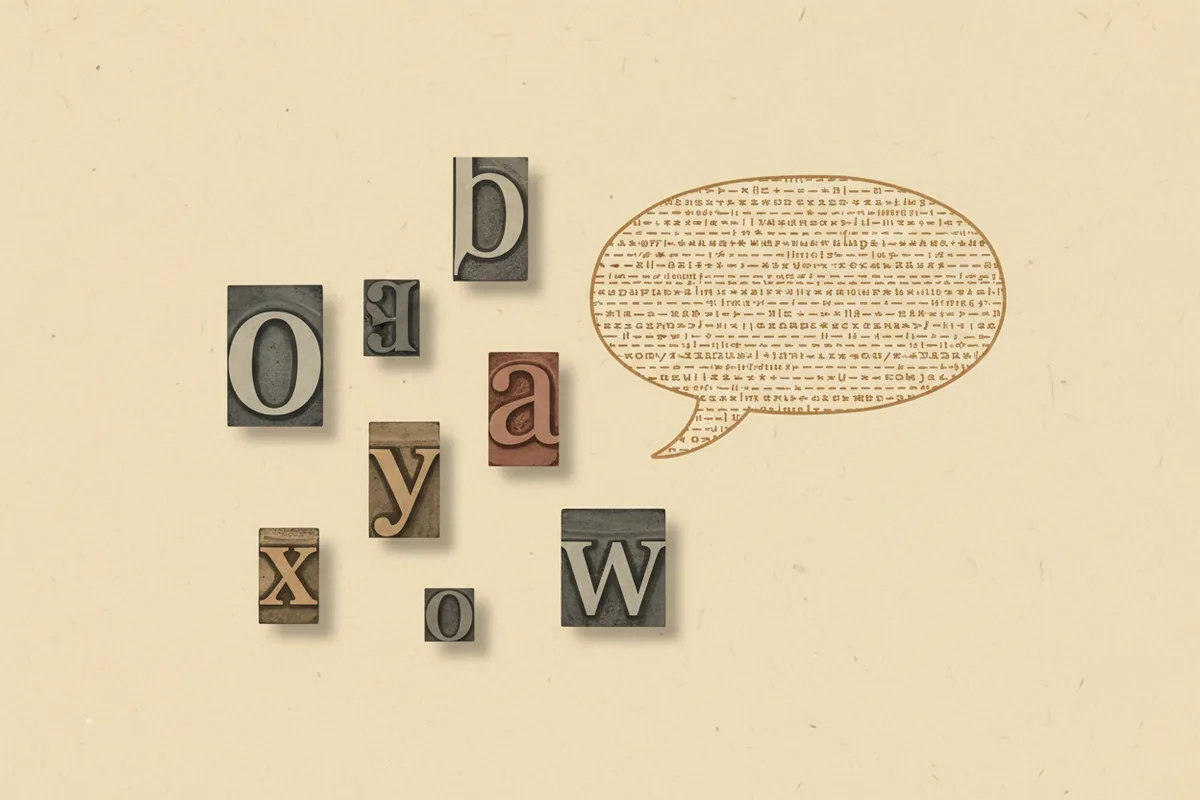
Lorem ipsum is not true slang, but it is sometimes used informally to mean ‘placeholder’ or ‘nonsense text’ - especially in online communities and among designers. When someone says ‘That text is just lorem ipsum’, they mean it is temporary filler that signifies nothing. This article clarifies the misconception, explains the origin of the phrase, and gives real examples of its casual use.
Lorem Ipsum Has a Defined Origin, Not a Slang Etymology
Lorem ipsum is a dummy or placeholder text commonly used in graphic design, publishing, and web development. It is a corrupted version of De finibus bonorum et malorum, a 1st-century BC text by Cicero, with words altered, added, and removed to make it nonsensical and improper Latin. The first two words are the truncation of dolorem ipsum (‘pain itself’). Because the text is deliberately garbled, it looks like Latin but carries no meaning - which is exactly why it became the default filler.
How ‘Lorem Ipsum’ Became a Casual Term for Filler
In informal contexts, ‘lorem ipsum’ is used to mean ‘placeholder’ or ‘nonsense text’ - e.g., ‘That text is just lorem ipsum’ meaning it’s temporary filler. This usage started in design and publishing circles and spread to tech, marketing, and even everyday conversation. It is not slang in the strict sense (no alternative meaning, no subculture code), but it works as a shorthand. Designers might say ‘I still see lorem ipsum in the mockup’ to indicate unfinished copy. Developers may leave ‘lorem ipsum’ in code comments as a temporary stand-in.
The Origin Story: From Cicero to Letraset to Casual Use
Versions of the Lorem ipsum text have been used in typesetting since the late 1960s, when Letraset transfer sheets popularized it. The physical source may have been the 1914 Loeb Classical Library edition of De finibus, where the Latin text breaks off on page 34 with ‘Neque porro quisquam est qui do-’ and continues on page 36 with ‘lorem ipsum….’ The first published explanation of the text’s origin is attributed to Richard McClintock, a Latin scholar at Hampden-Sydney College, who connected Lorem ipsum to Cicero’s writing sometime before 1982.
McClintock first published his discovery in a 1994 letter to John McWade, the editor of Before & After magazine. He later admitted in a 2026 interview that the claim the text had been used since the 1500s was a guess with no evidence to back it up.
The version in use today is derived from Letraset transfer sheets first published in 1966. According to Letraset designer Dave Farey, the text was supplied by British librarian James Mosley as an alternative to the Quousque tandem abutere text from elsewhere in Cicero’s writings that had been used in typography manuals since the 1730s. James Mosley, head librarian at St. Bride Printing Library, delivered Letraset the Cicero quotation originally known as ‘Forum ipsum’, which had become garbled by typesetters since the mid-1500s.
Why Lorem Ipsum Works for Casual Use
Lorem ipsum is a specific form of what is generally referred to as ‘Greeking’ - a style of displaying or rendering text to emphasize form over details or display placeholders for unavailable content. The purpose of Lorem ipsum is that, since it’s unintelligible, nobody will attempt to read it, but instead focus on other aspects of the design. ‘Lorem ipsum’ and its following lines are described as ‘pseudo-Latin’ - it uses Latin or Latin-like words, but is ‘garbled’ according to the Cambridge Dictionary.
The point of lorem ipsum is that it looks just realistic enough to work as a demonstration, yet signifies nothing. This very quality makes it a perfect shorthand for ‘temporary filler’ in casual speech.
Common Informal Uses and Examples
- In design reviews: ‘Don’t worry about the copy, it’s lorem ipsum.’
- In code comments: A developer might write ‘’ to mark a placeholder block.
- In everyday language: Someone might say ‘That paragraph is all lorem ipsum to me’ meaning it’s meaningless or confusing.
None of these are slang definitions, but they show how the term evolved from a proper noun for a specific text into a generic label for any filler content.
The Difference Between Slang and Jargon
Slang is informal language that often emerges from subcultures, changes meaning quickly, and may be opaque to outsiders. Jargon is technical language specific to a field. Lorem ipsum sits closer to jargon: designers and developers use it precisely to refer to the standard placeholder text, not as a substitute for ‘nonsense’ in general. Over time, the casual use has expanded beyond professional circles, but it still lacks the hallmarks of true slang.
Using ‘Lorem Ipsum’ Casually Is Fine in Context
It is fine in informal discussions among colleagues who understand the reference. However, using it with a general audience may cause confusion. If you say ‘This report is just lorem ipsum,’ a non-designer might not know you mean temporary filler. It is clearer to say ‘This is placeholder text’ or ‘This is dummy content.’ For most purposes, stick to plain language unless you are sure your listeners know the term.
Frequently asked questions
Is 'lorem ipsum' actually slang?
No, lorem ipsum is not slang in the linguistic sense. It is a technical term for a specific placeholder text. Some people use it informally to mean 'filler' or 'nonsense,' but this is a casual extension of its literal meaning, not a new slang definition.
What does 'lorem ipsum' mean in casual conversation?
In informal conversation, 'lorem ipsum' often means 'temporary placeholder text' or 'meaningless filler.' A designer might say 'It's just lorem ipsum' to indicate the content is not final. It can also mean 'nonsense' when used figuratively.
Where did people start using 'lorem ipsum' as a casual term?
The casual use started in design and publishing communities where lorem ipsum is the default dummy text. It spread from there to web development, marketing, and tech. It became a short way to say 'this is placeholder content.'
Can I use 'lorem ipsum' to mean 'nonsense' in everyday speech?
You can, but many people may not understand the reference. It is clearer to say 'nonsense' or 'filler.' Among designers and developers, the term is well understood. Outside those groups, it might cause confusion.
Is 'lorem ipsum' considered jargon or slang?
It is primarily jargon - a technical term used in design, publishing, and web development. It has gained some slang-like features in limited contexts, but it does not meet the criteria for true slang (no secret meaning, no subculture code).
Did 'lorem ipsum' have a different meaning in the past?
No, it has always referred to the scrambled Latin placeholder text. Its casual use as a generic term for filler is relatively recent. Historically, it was either the actual text or the name of that text.
How did 'lorem ipsum' become a common term?
It became common because of its inclusion in Letraset transfer sheets in the 1960s and later in Aldus PageMaker in the 1980s. As design software spread, so did the term. Today, almost every designer knows it.
Are there any risks to using 'lorem ipsum' casually?
The main risk is misunderstanding. A client or manager might think the content is final. In professional contexts, it is better to say 'placeholder text' to avoid ambiguity. Also, leaving lorem ipsum in production can cause legal or SEO issues.